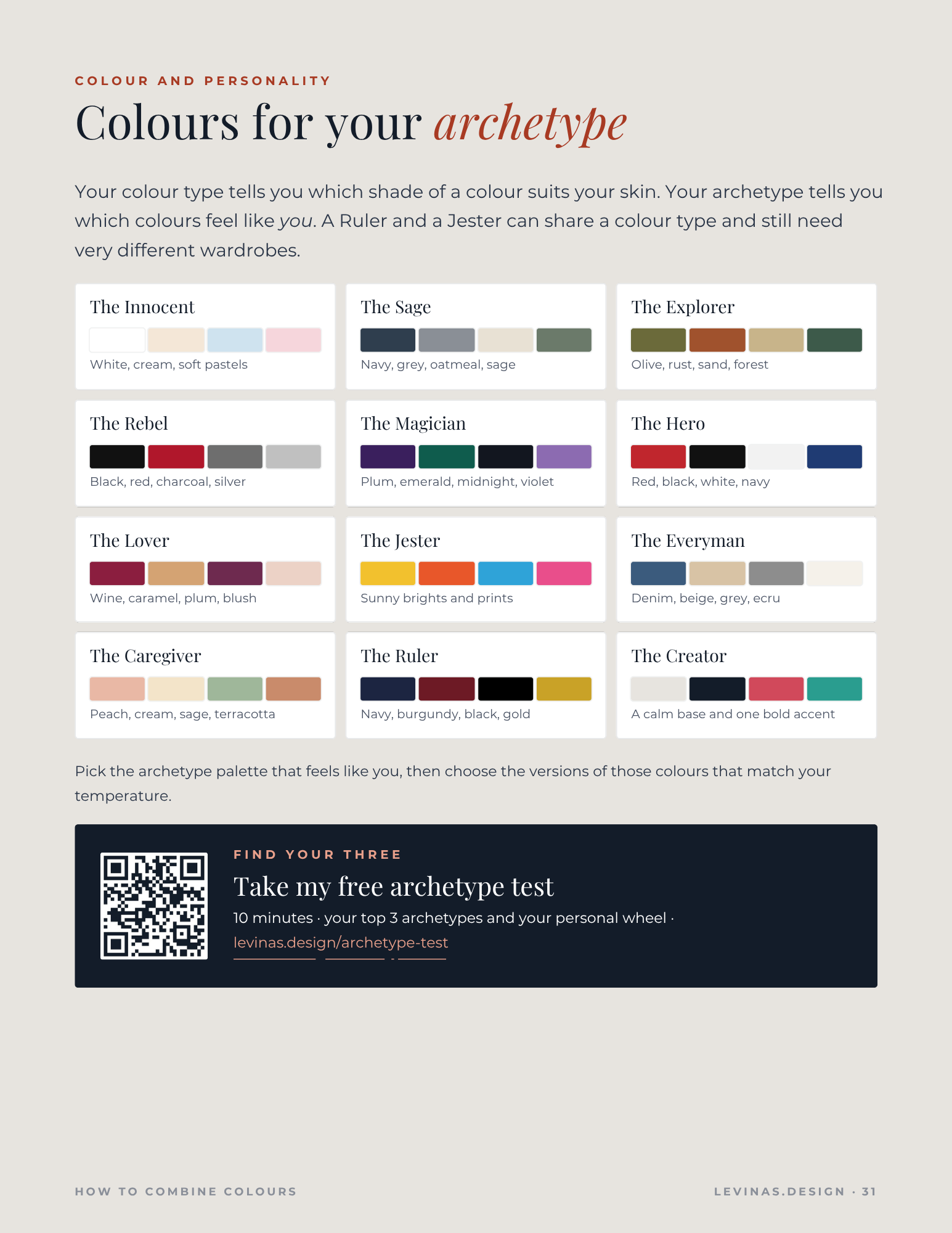
Free colour guide

How to combine colours and create stunning looks

My free 34-page guide shows you the six methods stylists use to mix colours, so your outfits look effortless instead of safe.

  • 6 colour-mixing methods, each with a colour wheel and palettes to copy
  • 70+ real outfit ideas, one page of inspiration per method
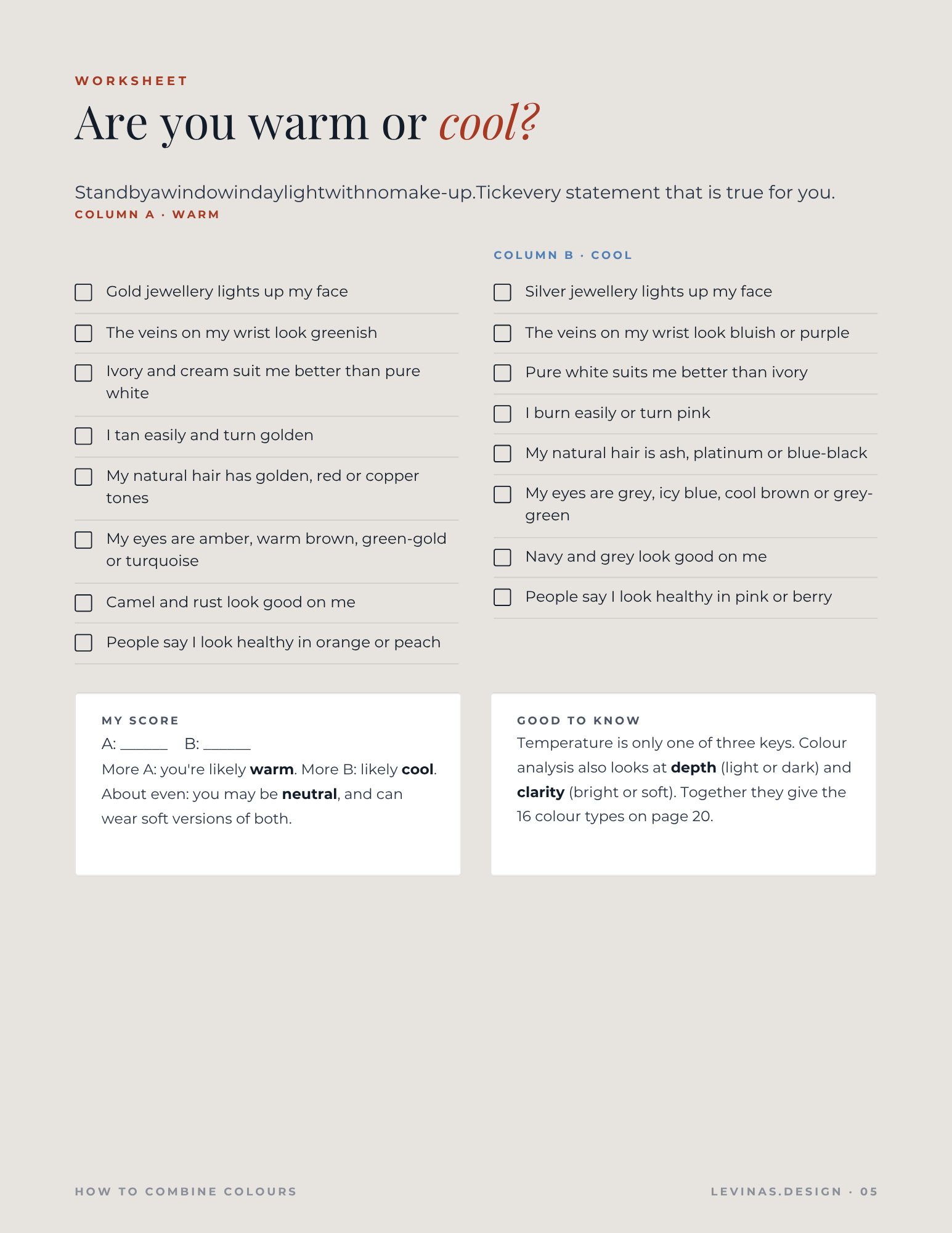
  • A quick test: are you warm or cool?
  • Colour psychology: what your palette says about you
  • Worksheets to build six outfits from your own wardrobe
  • The 16 colour types, and colours for each of the 12 archetypes
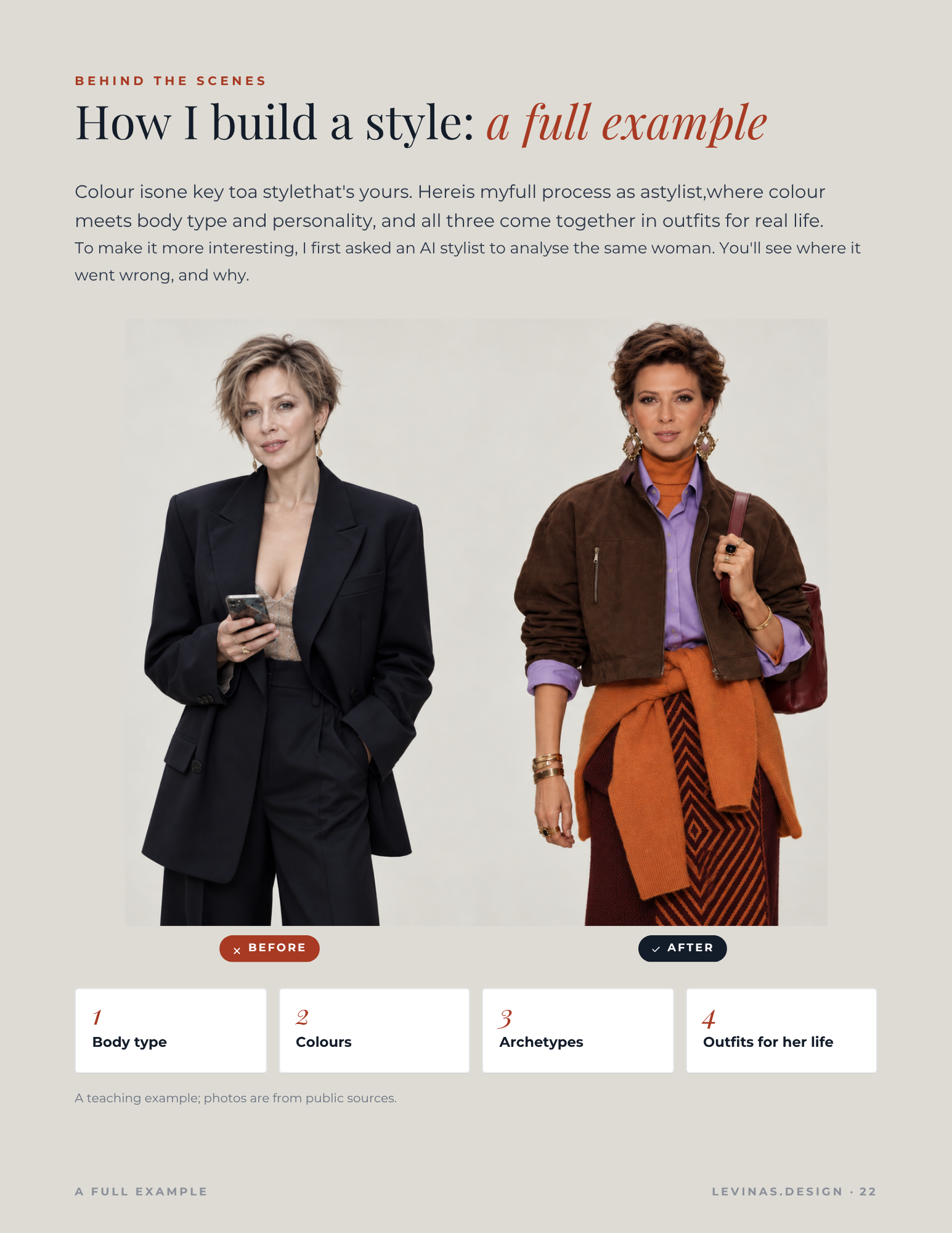
  • A full behind-the-scenes example: how I build a style, and where AI gets it wrong

A peek inside
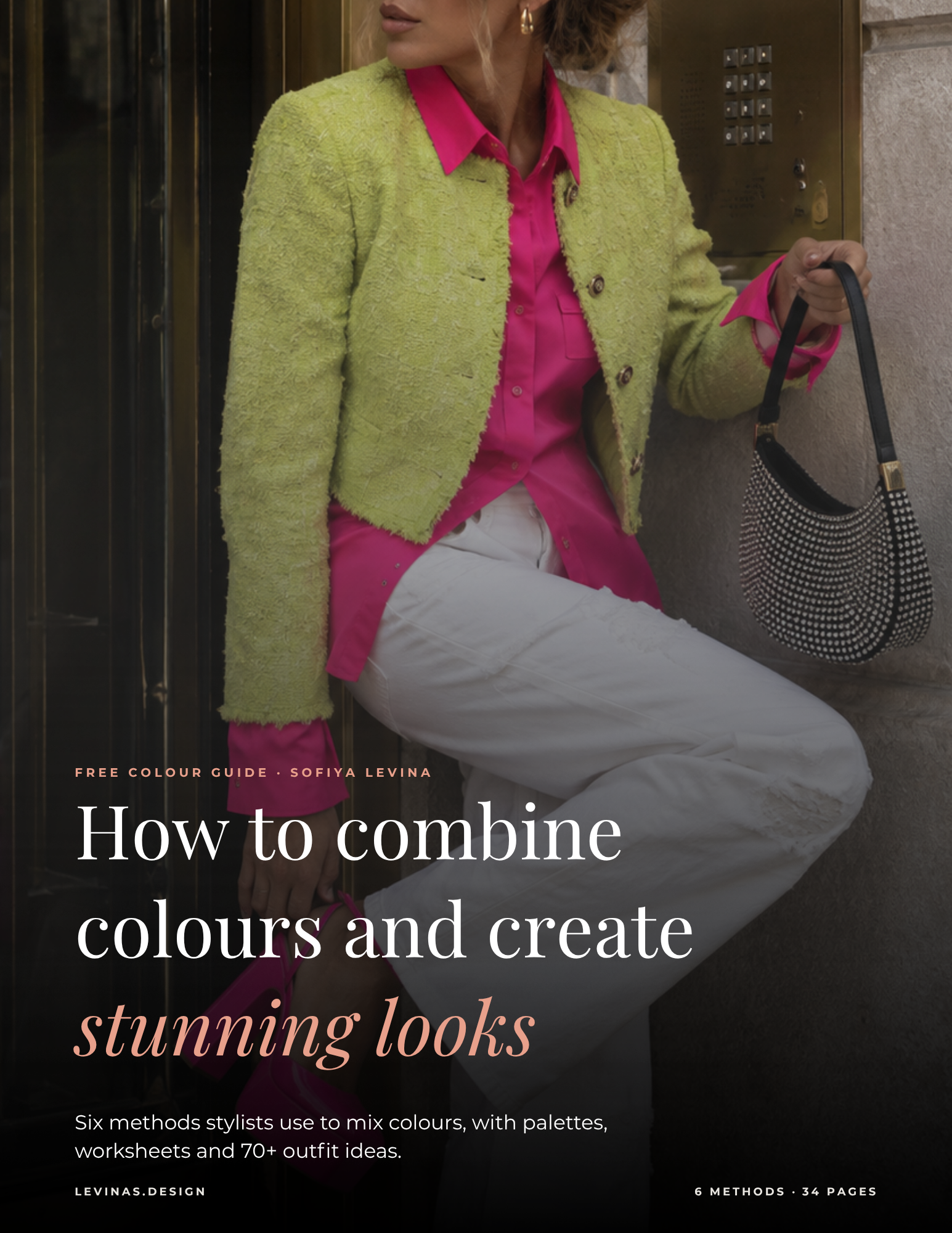
Colour guide: coverColour guide: six ways to mix coloursColour guide: are you warm or cool?Colour guide: monochromeColour guide: how I build a styleColour guide: colours for your archetype
Sofiya Levina

Sofiya Levina, stylist turned psychoanalytic coach. Pratt Institute design graduate, former luxury store director.

Get the free guide

34 pages · PDF · sent to your inbox

How to combine colours and create stunning looks: free colour guide cover
What describes you right now?

You'll get the guide by email, plus a few short emails with style ideas. Unsubscribe any time.

It's on its way

Check your inbox

I've sent the guide to . If it isn't there in a few minutes, look in Promotions or Spam. You can also download it right now:

Download the guide ↓

About this guide

How to combine colors in your outfits

Most of us own more black, grey and beige than we'd like, not because we don't love color, but because combining it feels risky. The good news: stylists don't guess. They use a handful of simple color combination methods, all based on the color wheel, and once you know them you can build outfits that look effortless instead of safe.

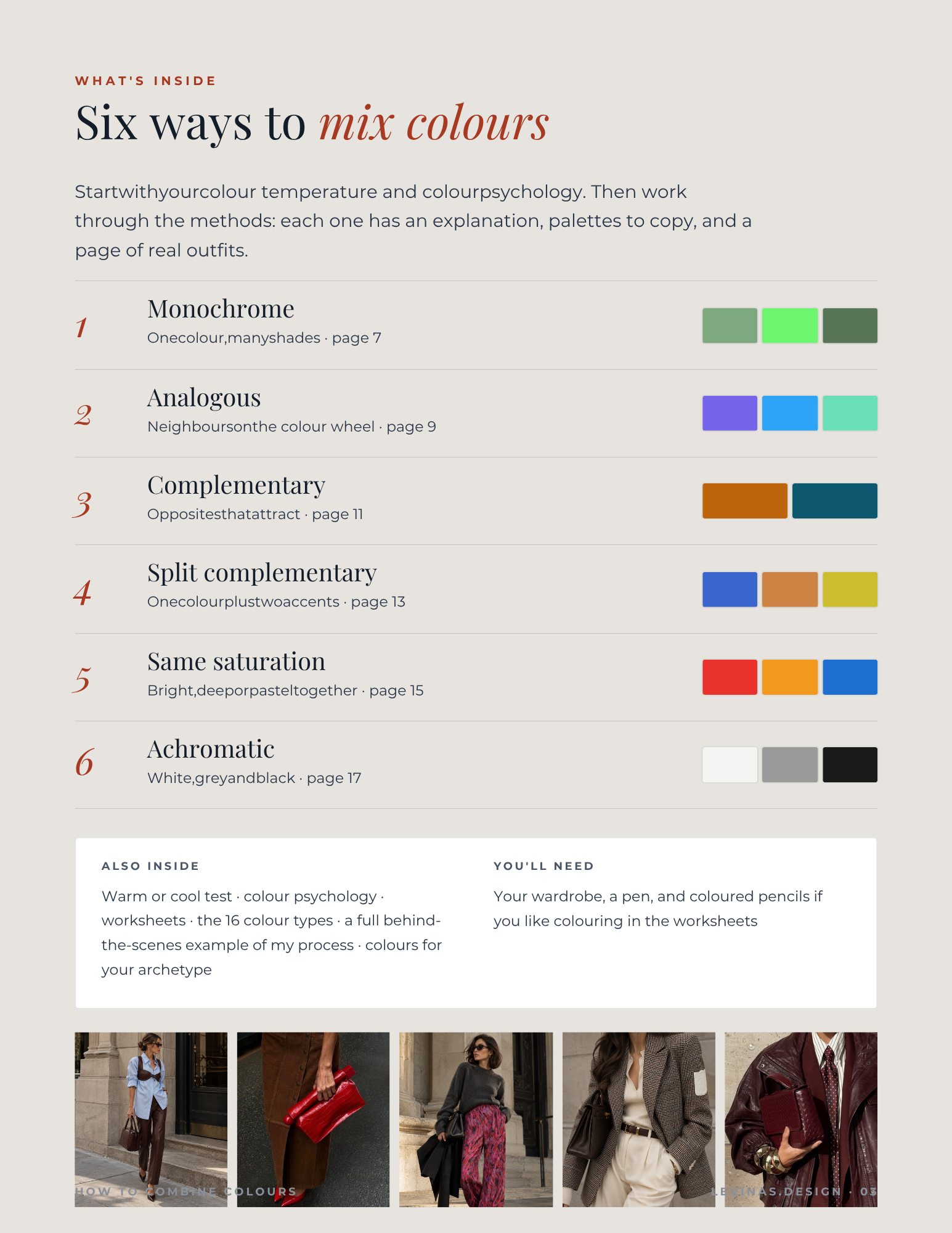
This free guide walks you through all six methods, with palettes you can copy and a page of real outfits for each one.

The 6 color combination methods stylists use

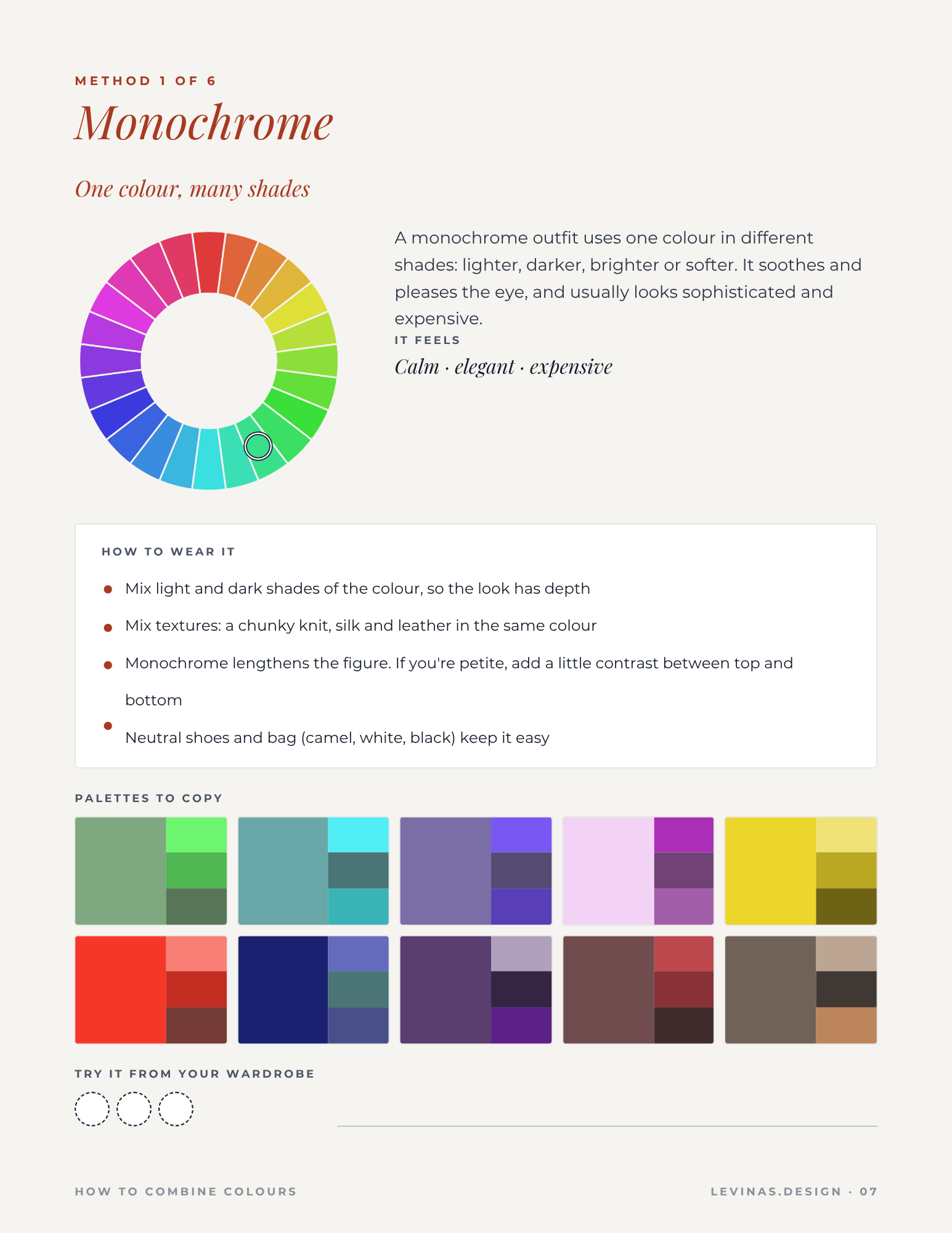
  1. Monochrome: one color in several shades. Calm, elegant and lengthening.
  2. Analogous: neighbours on the color wheel, like blue, violet and purple. Harmonious and easy to wear.
  3. Complementary: opposites on the wheel, like red and green or blue and orange. Bold and energetic.
  4. Split complementary: a base color plus the two colors next to its opposite. Creative, with less tension.
  5. Same saturation: any colors, as long as they are all bright, all deep or all pastel.
  6. Achromatic: white, grey and black, best with texture and one accent color.

Start with your color temperature

Every color has a warm (yellow-based) or cool (blue-based) version. Even red, green and pink come in both, which is why one red makes you glow and another makes you look tired. The guide includes a quick warm-or-cool self-test, and explains the 16 color types, built from temperature, depth and clarity, that I use in personal color analysis.

Color is half the story

Color tells people how you feel; your personality tells them who you are. In the guide you'll also find a palette for each of the 12 style archetypes and a full behind-the-scenes example of how I build a client's style. To find your own archetypes, take my free archetype test, or read the 12 style archetypes explained.

Frequently asked questions

What colors go well together in an outfit?

Colors that follow one of the color wheel methods: shades of one color (monochrome), neighbours on the wheel (analogous), or opposites (complementary). Colors of the same saturation, such as all pastels or all brights, also go well together, even if they don't follow the wheel.

How many colors should I wear in one outfit?

An easy rule is up to three colors plus neutrals. Let one color lead (about 60% of the outfit), a second support it (30%), and a third appear as an accent (10%), for example in a bag, shoes or jewellery.

How do I use the color wheel for clothes?

Find your main color on the wheel. Colors right next to it give a soft, harmonious look; the color directly opposite gives the strongest contrast; the two colors beside that opposite give a creative split complementary look. The guide shows each method on a wheel, with ready palettes.

What is the difference between warm and cool colors?

Warm colors have a yellow undertone (coral, mustard, olive, camel); cool colors have a blue undertone (fuchsia, emerald, navy, icy grey). Most people look best in one temperature near the face. The guide includes a short test to find yours.

How do I find out which colors suit me?

Start with the warm-or-cool test in the guide. For an exact answer, a personal color analysis looks at temperature, depth and clarity to find which of the 16 color types you are. I offer this as part of my personal styling packages, and you can start with a free 20-minute call.

Is the color guide really free?

Yes. Enter your name and email in the form above and the 34-page PDF arrives in your inbox. You'll also get a few short emails with style ideas, and you can unsubscribe with one click.

Keep reading